
Short answer: before a Houston freeze, rental owners should find and tag every water shutoff, cover outdoor faucets and backflow preventers, insulate attic and exterior-wall lines, set vacant homes to at least 55 degrees or drain them, and send tenants one clear text with instructions. There is a local twist on faucet dripping. The City of Houston has asked residents not to drip during recent freezes, while Katy and many MUD-served neighborhoods say to drip. The right advice depends on which water system serves the house.
This guide is written for owners of single-family homes and small rentals across Greater Houston. It focuses on pipes and tenant communication, the two things that caused the most damage and the most confusion in February 2021.
What Winter Storm Uri taught Houston rental owners
In February 2021, Houston dropped to 13 degrees on February 16 and stayed below freezing for about 44 straight hours, according to ABC13’s storm recap. Millions of Texans lost power, and boil-water notices spread across the region. For rental owners, the damage showed up in a few predictable places.
- Homes built for heat failed in the cold. Houston plumbing often runs through attics and exterior walls, places that get as cold as the outdoors once the power goes out.
- Power loss meant heat loss. A tenant can keep the thermostat at 70, but it does not matter if the grid is down for two days.
- Nobody knew where the shutoff was. Many tenants watched water pour through a ceiling while searching for a valve no one had shown them.
- Vacant homes took the worst hits. Plumbers reported cracked toilet tanks and split lines in empty houses where no one noticed the problem for days.
- Plumbers were booked for weeks. Owners who had a vendor relationship and parts on hand got repairs done far sooner.
You cannot control the grid. You can control how ready the house and the tenant are when the cold arrives.
When do pipes freeze in a Houston home?
Water freezes at 32 degrees, but a pipe inside a heated room is protected by the home’s warmth. The pipes that fail are the ones in unheated space: attic lines, pipes in exterior walls, garage plumbing, and anything outdoors. Those lines are at real risk when temperatures sit in the low to mid 20s for several hours, and wind makes it worse.
That is why a “hard freeze” forecast matters more than a single frosty morning. When the National Weather Service issues a hard freeze warning for Harris, Fort Bend or Montgomery County, start the checklist below.
Where Houston rental pipes freeze first
The drip question: it depends on your water system
This is the part most freeze articles get wrong for Houston. Dripping a faucet keeps water moving so it is less likely to freeze. But if thousands of homes drip at once, a city system that relies on pumps can lose pressure, which hurts firefighting and can trigger boil-water notices.
Here is what Houston, Katy and Harris County officials advised in January 2026:
- City of Houston water: do not drip faucets. Open cabinet doors, protect exposed pipes, and if you are leaving town, shut off the water and drain the lines.
- Harris County MUD and water-tower systems: let water trickle overnight during the freeze.
- City of Katy: let cold water drip from faucets fed by freeze-prone pipes.
The simplest way to tell which applies is the water bill. A city of Houston bill means a pumping system. A MUD or other utility district bill usually means a water-tower system. Note the answer in your property file for every home so your tenant text is right the first time.
For every rental, record the water provider, whether to drip, the main shutoff location, the curb valve location, the water heater type and whether there is an irrigation backflow preventer. When a freeze is forecast, you can send accurate instructions in minutes instead of guessing.
Owner checklist: 72 hours before a hard freeze
- [ ] Confirm the water provider and the correct drip guidance for each home
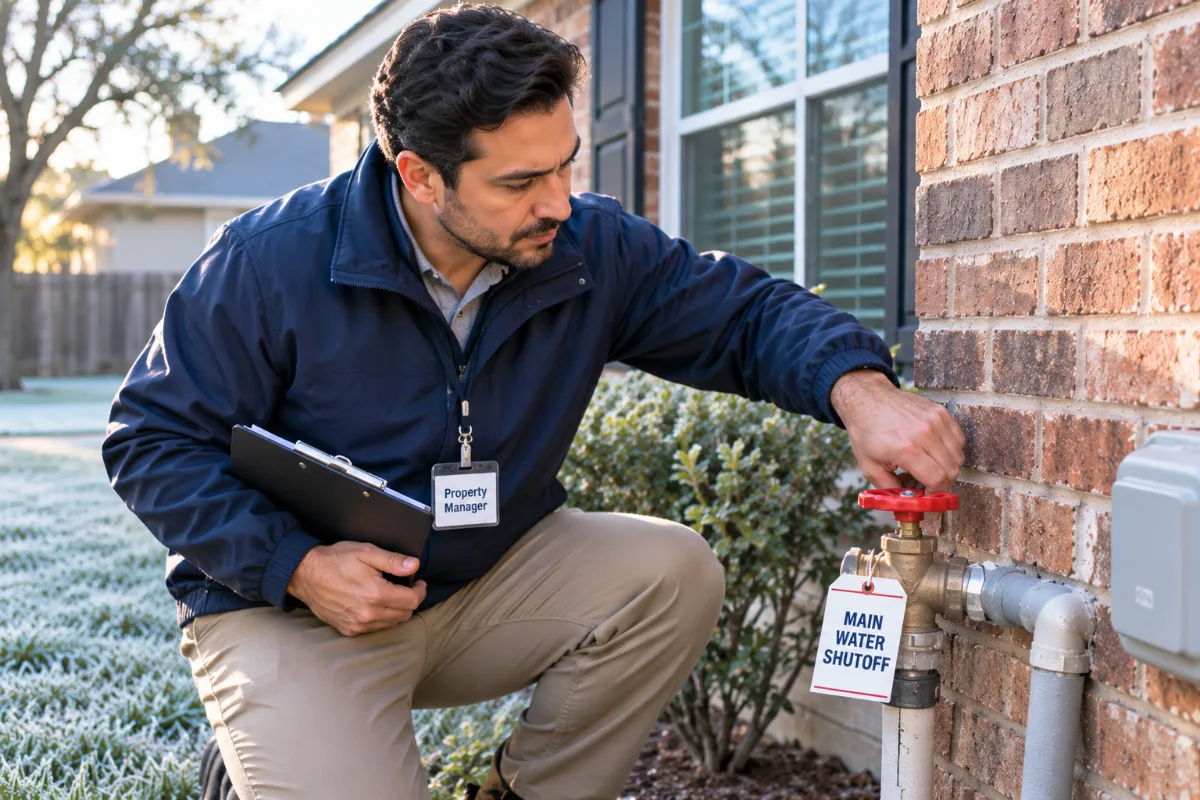
- [ ] Locate, photograph and tag the main shutoff valve with a bright label
- [ ] Make sure a curb-valve key is on site or that the tenant knows where the curb box is
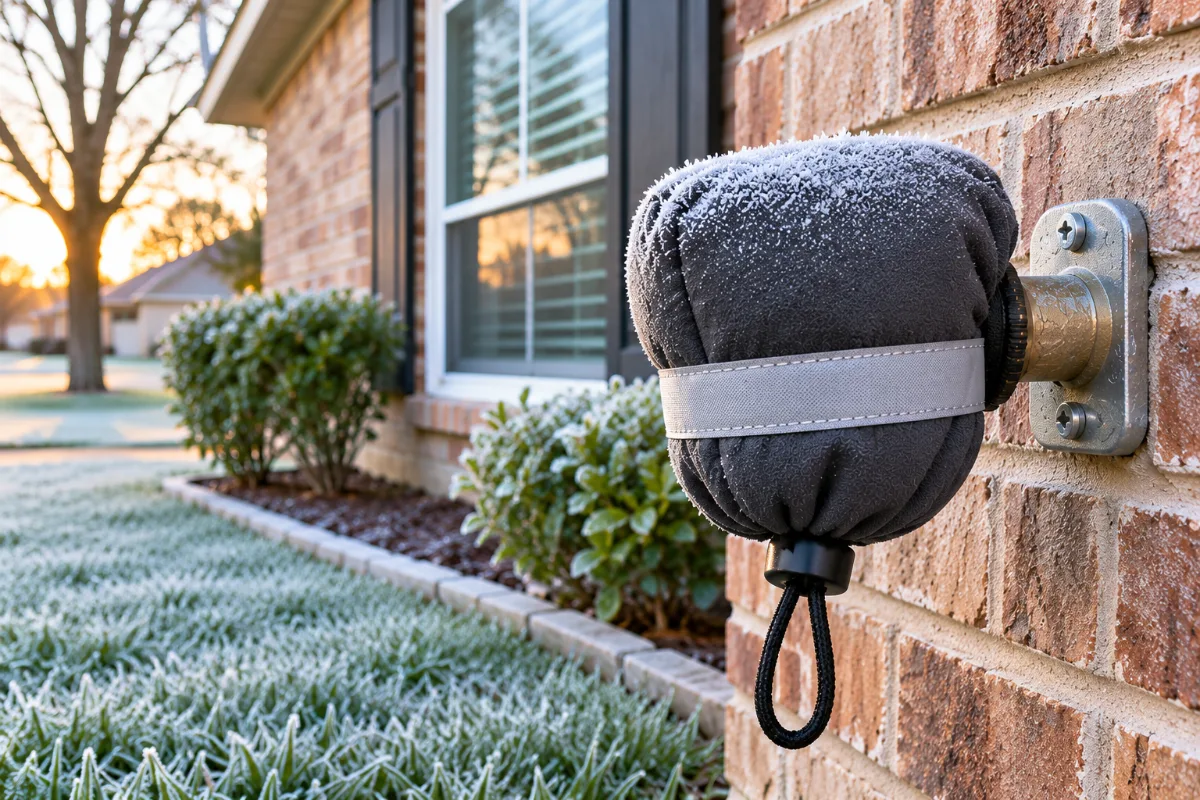
- [ ] Cover outdoor faucets and disconnect all hoses
- [ ] Shut off and drain irrigation systems and insulate the backflow preventer
- [ ] Wrap exposed pipe at the slab, meter and garage
- [ ] Check attic lines for missing insulation and add foam sleeves
- [ ] Review the tankless water heater manual and share freeze steps with the tenant
- [ ] Confirm your plumber and water mitigation vendor are on call
- [ ] Send the tenant freeze alert text (template below)
Vacant units and homes between tenants
Empty homes need a decision, not a hope. You have two safe options.
- Keep the heat on and check daily. The American Red Cross recommends leaving the heat at no lower than 55 degrees when a home is unoccupied in cold weather. Open interior doors and cabinet doors so heat reaches the plumbing, and arrange a daily walk-through.
- Shut off and drain. Close the main valve, open every faucet, flush each toilet to empty the tank, and drain outdoor lines. Leave a note on the main valve and on the kitchen counter saying the water is off on purpose, so a vendor or showing agent does not turn it back on.
If the forecast includes a real chance of long power outages, draining is the safer path. A thermostat does nothing when the power is off.
Briefing tenants: a freeze alert text you can copy
Tenants do better with short, specific instructions sent a day or two ahead. Adjust this template for each home.
Freeze alert for [address]: temperatures may drop into the low 20s on [day]. Please (1) keep the heat on, (2) open the cabinet doors under the kitchen and bathroom sinks, (3) [drip / do not drip] faucets, as advised by [water provider], and (4) bring pets inside. Your main water shutoff is [location] and is tagged in orange. If a pipe bursts, turn that valve off first, then call us at [number]. Never use an oven, grill or generator indoors for heat. Reply to this text so we know you got it.
What the law says about heat in Texas rentals is covered in our Texas landlord heat requirements guide. Freeze prep is the practical side of the same duty: keep the home livable and respond fast when something breaks.
The first hour after a pipe bursts
A burst pipe is a race against water. Share these steps with every tenant and vendor.
- Shut off the main water valve. This stops the damage from growing.
- Turn off the water heater. Switch off power to an electric unit or set a gas unit to pilot.
- Stay clear of wet electrical areas. If water is near outlets or the panel, keep people away and call a professional.
- Take photos and video of the leak and the damage before cleanup starts.
- Call the manager or owner and a plumber. Report the time the leak started and when the water was shut off.
- Start drying within 24 to 48 hours. Remove standing water, run fans and dehumidifiers, and pull wet rugs to limit mold.
Flooding from broken pipes is treated as an urgent condition under Texas repair law, so expect to move quickly. The law does recognize disasters. After an extended freeze, a landlord facing a real shortage of labor or materials can deliver a sworn affidavit that delays a tenant’s repair-and-deduct remedy for up to 30 days, as long as the landlord keeps making a diligent effort. Our Texas landlord-tenant law guide explains the wider repair rules.
Torches and propane heaters near frozen pipes start house fires. A hair dryer on a low setting, a space heater kept well away from anything that can burn, or warm towels are safer. If the line is inside a wall, call a plumber.
Make freeze prep part of the lease and every turnover
The best freeze plans are written down long before December. Add a short winter section to your Texas residential lease agreement or a move-in addendum that asks tenants to keep the heat on during freezes, follow written freeze notices, and report leaks right away.
At each turnover, tag the shutoffs again, photograph them for the property file and walk the new tenant to the main valve. The same shutoff map pays off twice a year, since it is also the first step in our hurricane prep checklist. You can find more owner tools on our Houston landlord resources page.
Quick reference
- Start your checklist when a hard freeze warning is issued.
- Attic, exterior-wall, garage and outdoor pipes freeze first.
- Drip or do not drip based on the water provider, not habit.
- Vacant homes: heat at 55 degrees or higher with daily checks, or shut off and drain.
- Every tenant should know where the main shutoff is before the cold arrives.
- After a burst, shut the water off, document, call, and dry within 48 hours.
For the latest county alerts during a storm, sign up with ReadyHarris.
Texas Lone Star Property Management can tag shutoffs, brief your tenants before a hard freeze and coordinate plumbers when the temperature drops. See the areas we serve across Greater Houston, or contact us for a free consultation before the next cold front.
Frequently Asked Questions
Should I tell my Houston tenants to drip their faucets during a freeze?
It depends on who supplies the water. In recent freezes the City of Houston asked residents not to drip faucets because its system relies on pumping, and mass dripping can drop water pressure. Many MUD-served areas in Harris County and cities such as Katy have said to let cold water trickle. Check the water bill for the property and send tenants the advice that matches that system.
At what temperature do pipes freeze in Houston homes?
Water freezes at 32 degrees, but pipes inside a heated home usually hold up until it gets much colder. Pipes in attics, exterior walls, garages and outdoor hose bibs are the ones at risk, especially when temperatures sit in the low to mid 20s for several hours or wind pulls heat away. Houston homes were built for heat, so even a short hard freeze can split an exposed line.
What should I do with a vacant rental before a hard freeze?
Either keep the heat on at 55 degrees or higher and have someone check the home daily, or shut off the main water valve and drain the lines by opening faucets and flushing toilets. If a long power outage is possible, draining is the safer choice, because a thermostat does nothing without electricity.
Who pays when a pipe bursts in a Houston rental?
Usually the owner pays to repair the plumbing and building damage, often through the landlord policy, and the tenant’s renters insurance covers the tenant’s belongings. A tenant can be responsible if the damage came from their own carelessness, such as ignoring written freeze instructions, but that depends on the lease and the facts.
How fast does a landlord have to fix a burst pipe in Texas?
Flooding from broken pipes is treated as an urgent condition under the Texas Property Code, so the owner should act right away. After a widespread disaster such as an extended freeze, the law lets a landlord deliver a sworn affidavit that can delay a tenant’s repair-and-deduct remedy for up to 30 days when labor or materials are truly scarce. Diligent, documented effort is the key.
What is a hard freeze in Houston?
A hard freeze generally means temperatures in the mid 20s or colder for several hours, cold enough to damage exposed pipes and plants. The National Weather Service issues freeze and hard freeze warnings for the Houston area, and those warnings are a good trigger to start your freeze checklist.


