

Few landlord tasks generate more disputes and more lawsuits than the security deposit. In Texas, the rules are specific, the deadlines are strict, and the penalties for getting it wrong can far exceed the deposit itself. If you own a rental in Houston, this 2026 guide walks through exactly what the Texas security deposit law requires: the return deadline, what you can and cannot deduct, the itemization rules, and the real cost of a bad-faith withholding.
This is general information for Houston rental owners, not legal advice. Security deposit disputes turn on the specific facts and lease terms, so consult a Texas attorney for your situation.
The 30-day rule: Texas Property Code 92.103
The core deadline every Texas landlord must know lives in Texas Property Code Sec. 92.103: a landlord must refund a security deposit no later than the 30th day after the date the tenant surrenders the premises. “Surrenders” generally means the tenant has moved out and returned possession (keys, vacated the unit).
There is one important condition: the tenant is expected to give the landlord a forwarding address so the refund and any itemization can be delivered. A landlord is not obligated to return the deposit or give the itemized list until the tenant provides that address. That said, the smart practice is to document everything and account within 30 days rather than sit on the deposit, because the penalties for delay are steep.
The 30 days run from when the tenant actually surrenders the unit, which may differ from the lease end date. Note the surrender date in writing so both sides agree on when the deadline is.
What you can, and cannot, deduct
Texas law lets a landlord deduct from the deposit for legitimate charges, but it draws a hard line around normal wear and tear.
You may deduct for:
- Unpaid rent owed under the lease.
- Damage beyond normal wear and tear caused by the tenant, their family, or guests.
- Other charges the lease legitimately and clearly authorizes.
You may not deduct for:
- Normal wear and tear, defined by statute as deterioration that results from the intended and reasonable use of the dwelling, not from negligence, carelessness, accident, or abuse.
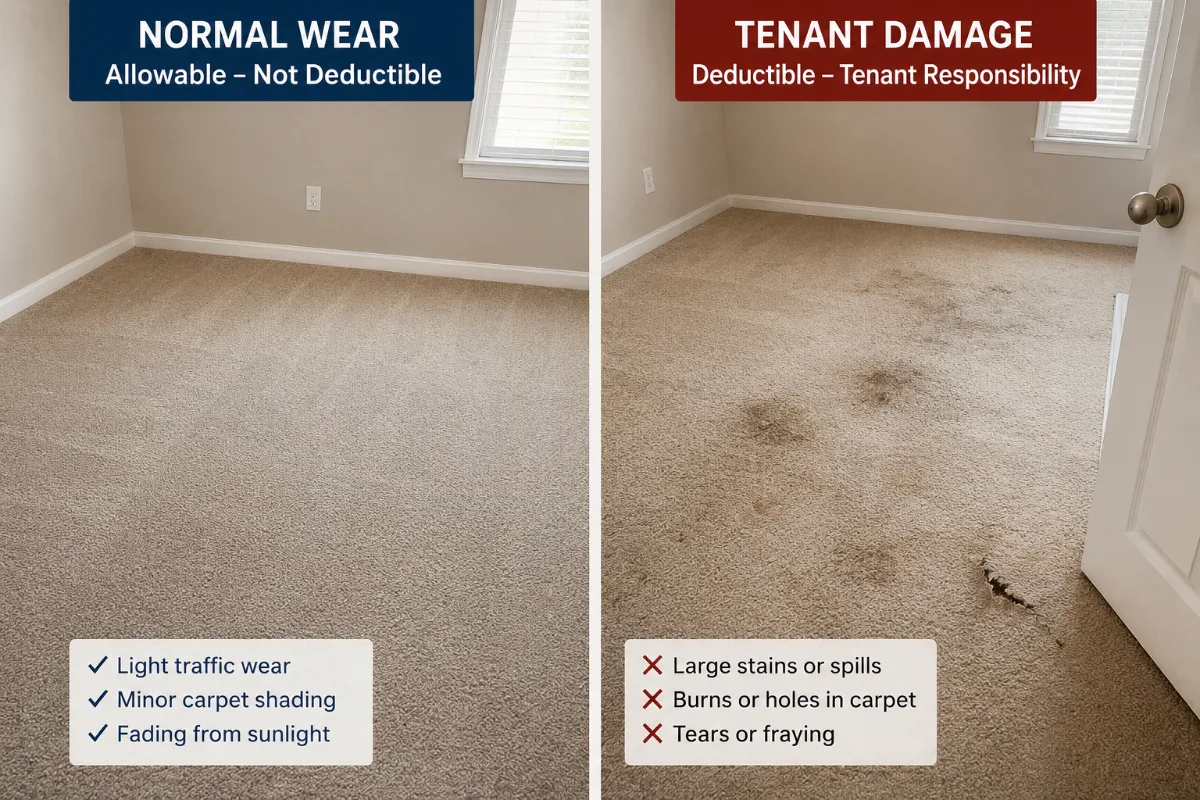
The wear-and-tear line is where most disputes live. Faded paint, lightly worn carpet in traffic areas, and small nail holes are typically normal wear. Large holes in walls, pet stains through the carpet pad, broken fixtures, and filth that requires special cleaning generally are not. Understanding this distinction is essential, and it connects directly to the broader tenant-rights framework in Texas landlord-tenant law.
The itemization requirement
If you keep any portion of the deposit, Texas law requires you to give the tenant a written description and itemized list of all deductions, along with the remaining balance of the deposit. This itemization must be delivered within that same 30-day window.
A key nuance: the itemized list requirement does not apply if the tenant owes rent at surrender and there is no controversy about the amount of rent owed. But if there is any dispute, or the deductions are for damage rather than undisputed rent, you must itemize. When in doubt, itemize; a clear, honest list is your best defense if a tenant challenges the deductions.
A strong itemization includes the specific damage, the reasonable cost to repair or replace, and, ideally, supporting documentation like move-in and move-out photos and vendor invoices.
Normal wear and tear vs. tenant damage: real examples
Because the wear-and-tear line drives most deposit fights, it helps to see where Texas courts and reasonable landlords typically draw it. These are general guidelines, not a legal ruling on your specific unit, but they show the pattern.
Usually normal wear and tear (not deductible):
- Paint that has faded or shows minor scuffs after years of living.
- Carpet that is lightly worn in high-traffic walkways.
- A few small nail or pin holes from hanging pictures.
- Loose grout or minor caulking wear in a bathroom.
- Worn or slightly loose door handles from ordinary use.
Usually tenant damage (deductible):
- Large or numerous holes in walls, or unapproved paint colors requiring repainting.
- Carpet with pet stains, burns, or heavy soiling through the pad.
- Broken windows, doors, tiles, or fixtures.
- Missing appliances, blinds, or hardware.
- Filth or trash requiring cleaning well beyond a standard turn.
The guiding question is always the statutory one: did the condition result from reasonable, intended use (not deductible) or from negligence, carelessness, accident, or abuse (deductible)? When a Houston tenant disputes a charge, the landlord who can show a signed move-in condition report plus dated before-and-after photos almost always prevails, while the landlord relying on memory usually does not.
Time-stamped photos and a signed move-in condition form are what win deposit disputes. Without them, it is your word against the tenant’s, and Texas courts will scrutinize the landlord’s paperwork closely.
The penalty for bad faith: why this matters
Texas does not treat deposit rules as suggestions. Under the Property Code, a landlord who in bad faith retains a security deposit, or fails to provide the required written itemization and refund balance, may be liable for:
- $100, plus
- three times the portion of the deposit wrongfully withheld, plus
- the tenant’s reasonable attorney’s fees.
Crucially, the statute creates a presumption of bad faith if the landlord fails to return the deposit or deliver the itemized list within 30 days. That presumption is why the deadline is not just a best practice; missing it can flip the burden onto you and expose you to treble damages on top of the deposit. A $1,500 deposit mishandled can become a multi-thousand-dollar judgment plus the tenant’s legal fees.
A simple compliance checklist for Houston landlords
To stay on the right side of Texas security deposit law in 2026:
- Document move-in condition with a signed form and photos.
- Collect a forwarding address at move-out.
- Inspect promptly and take detailed move-out photos.
- Separate normal wear from tenant damage honestly.
- Refund and itemize within 30 days of surrender.
- Keep records of every deduction, invoice, and communication.
- Never quietly convert the refundable deposit into an undisclosed fee.
Get these seven steps right, and you eliminate the vast majority of deposit disputes before they start.
Let a Houston team handle the deadlines
Deposit accounting is exactly the kind of deadline-driven, documentation-heavy task where a small slip becomes an expensive judgment. Professional Houston property management runs standardized move-in and move-out inspections, tracks the 30-day clock, itemizes deductions defensibly, and keeps you compliant with the Texas Property Code, so you never lose treble damages over a missed date.
Texas Lone Star Property Management handles move-out inspections, itemized deductions, and on-time deposit returns for Houston rental owners. Reach out to our team to protect your properties and your peace of mind.
Frequently Asked Questions
How long does a landlord have to return a security deposit in Texas?
Under Texas Property Code Sec. 92.103, a landlord must refund a security deposit no later than 30 days after the tenant surrenders the premises. The tenant must provide a forwarding address, but even without one, the landlord’s duty to account is not permanently excused; providing the address protects the tenant’s right to sue over a wrongful withholding.
What can a landlord deduct from a security deposit in Texas?
A Texas landlord may deduct for unpaid rent and for damage beyond normal wear and tear, plus other charges the lease legitimately allows. You cannot deduct for normal wear and tear, which is the natural deterioration from ordinary, reasonable use, such as minor carpet wear or small nail holes.
Does Texas require an itemized list of deductions?
Yes. If a landlord keeps any part of the deposit, they must give the tenant a written, itemized list of all deductions along with the balance of the refund, generally within the same 30-day window. There is a narrow exception when the tenant owes rent, and there is no dispute about that amount.
What is the penalty if a landlord wrongfully withholds a deposit in Texas?
A landlord who acts in bad faith by retaining a deposit or failing to provide the itemized list may be liable for $100 plus three times the wrongfully withheld portion, plus the tenant’s reasonable attorney’s fees. Texas law presumes bad faith if the landlord fails to return the deposit or provide the itemization within 30 days.
Can a Texas landlord charge a non-refundable deposit or a cleaning fee?
A landlord can charge non-refundable fees (like some cleaning or pet fees) only if the lease clearly labels them as non-refundable. You cannot quietly convert the refundable security deposit into a fee. Deductions from the actual security deposit must still be for unpaid rent or damage beyond normal wear and tear.


